Viking Lars | Tuesday, 21 December 2021
Why am I writing about an autumn fly right now, when both frost and snow have settled over Denmark? Hey - we might end up having a white Christmas, which is always nice. And we need the temperature changes. The drop in water temperature is what sends the sea trout up stream to follow. The spring's rise in temperature is what send them back to the ocean to return for another rounds. And it's also what send the grayling to the spawning redds and the pike. Let's get back to the fly.
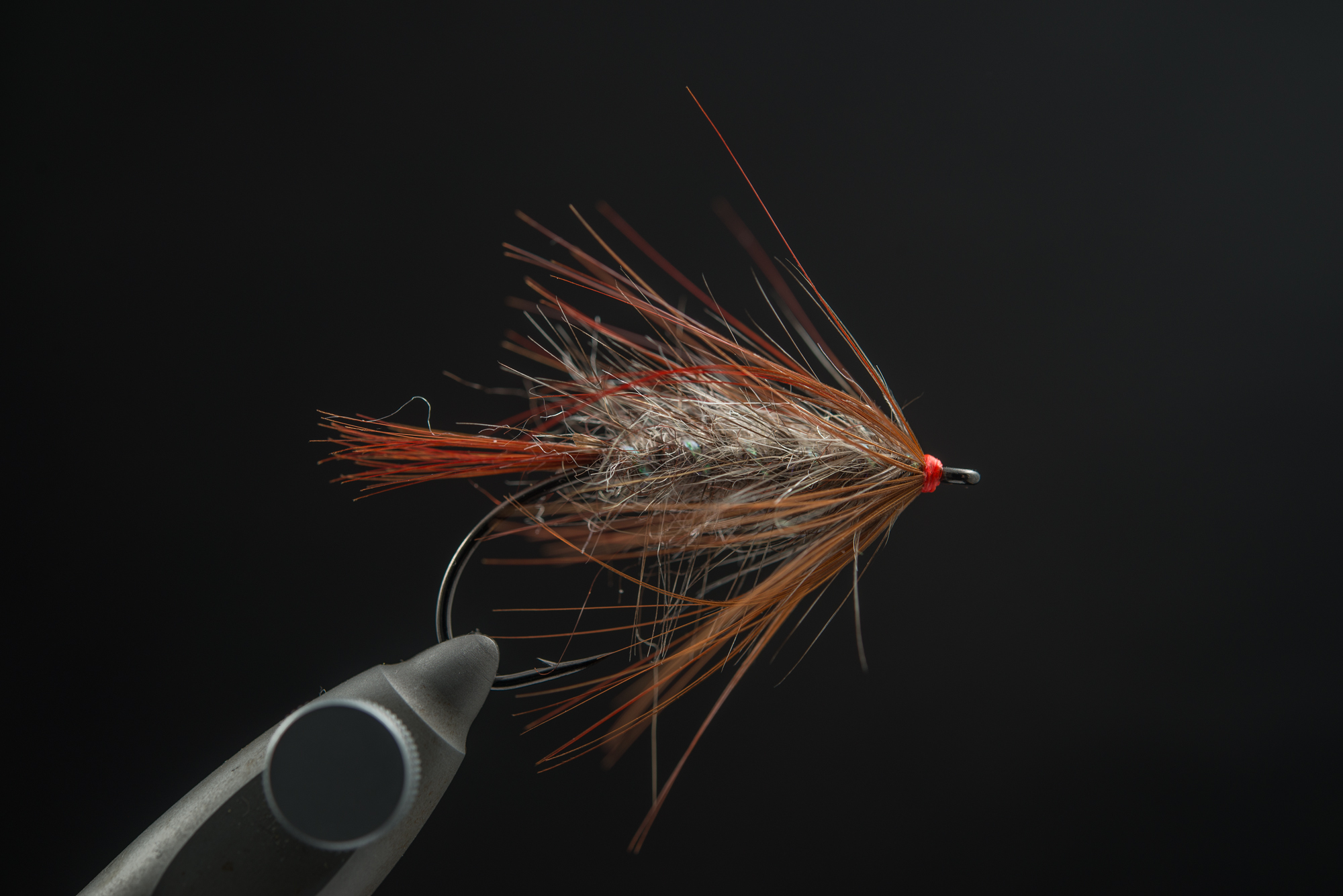
The Autumn Fly is named as such, not because it's particularly effective in the autumn, but because of the colour of the tail and front hackle, whch bears resemblance to the orange/red colours of leaves in the autumn. I don't know if there's a general consensus on when a fly can be called a classic. When it comes to classic salmon flies I know most operate with Pryce-Tannat's book from 1914 as the youngest a classic salmon fly can be. Anything younger is "modern".
Fly fishing for sea trout in the salt did begin as early as in the 1930's, but on a very small scale. It picked up in the late 1960's and by the late 1970's you probably couldn't say it was common, but at least fairly wide spread. By the mid 1990's it was quite common and methods and flies were well set. So non of the dedicated flies can be called classic in the sense above, but there are some we can call classics, for instance a well known pattern as the Mickey Finn, which was in use wuite early. Among the dedicated flies, the Autumn Fly can also be called classic, in my opinion.
It was tied first in the early 1990's (if memory serves) by Henrik Brangstrup and I think it's a quite beautful, elegant fly. But not an autumn fly - then what? It's a perfect example of the many generic flies that have been tied for Scandinavian saltwater flyfishing. It's a good deal of everything and a bit of nothing in particular. Depending on how it's fished, I think sea trout takes it for different prey - or maybe just out of curiosity.
I do know that it's very mobile and if one were to choose one fly, this would be a good choice.
Here's how I tie it
Hook: Ahrex NS 156, size 4-10.
Thread: Fire Orange UNI 6/0.
Tail: Fibres from a golden pheasant breast feather.
Rib: Pearl Mini Flat Braid from Lagartun.
Body: Hare's ear-like synthetic dubbing, in this case, Fly Scene UV Hare's Ear.
Palmer hackle: Grizzle, can be stripped on one side (recommened on smaller versions).
Front hackle: Golden Pheasant breast feather.
With the subdued red nuances, I though this would make a suitable Merry Christmas greeting from.
Have a great week!
Lars