Martyn White | Thursday, 9 April 2026
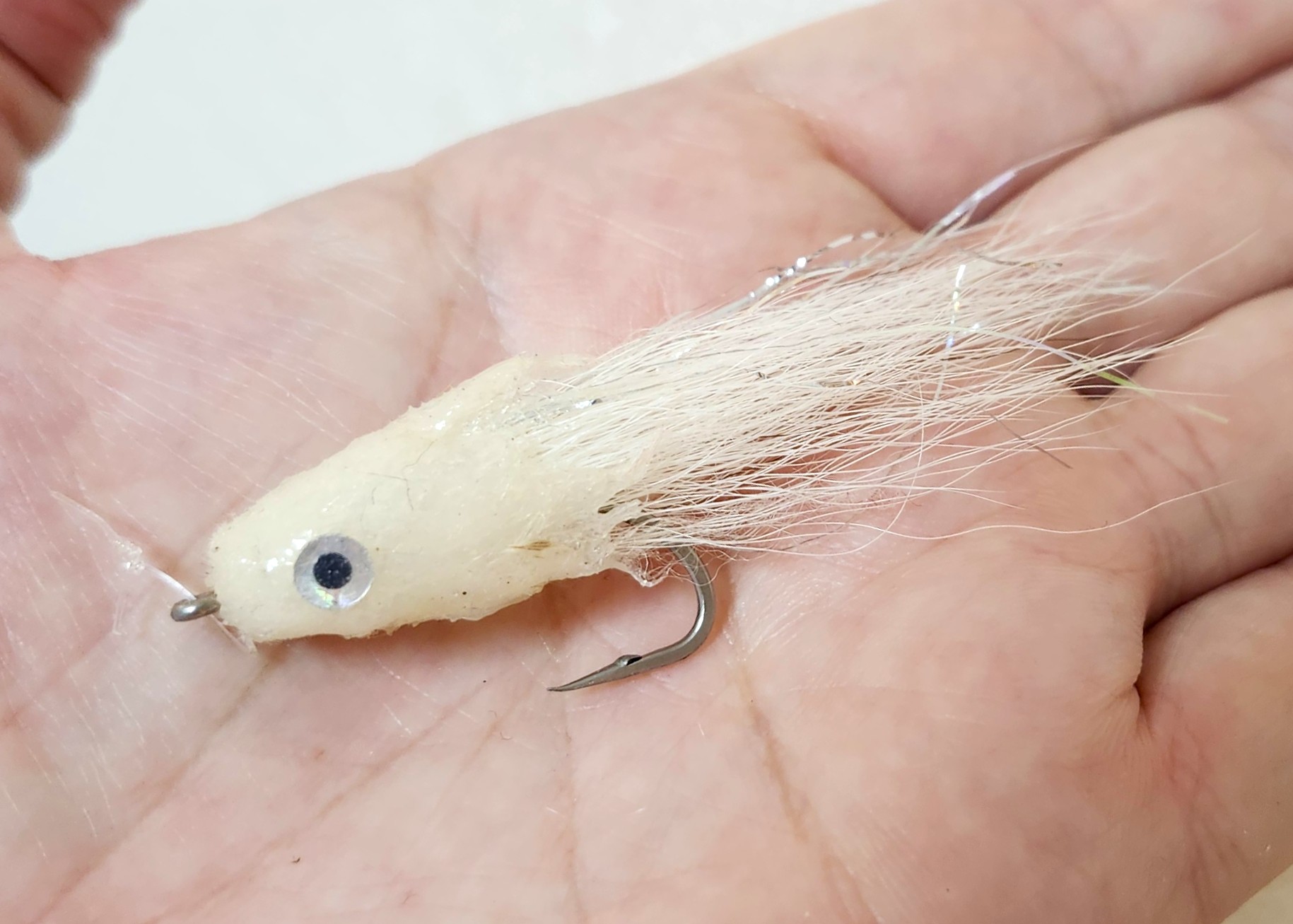
This week's fly is Bob Popovics' siliclone. Like so much of what sprang from his mind it’s deadly. In my opinion it’s probably the best mullet imitation ever devised and unlikely to be superseded.
It's a fantastic pattern that does a lot of things that nothing else really achieves. It's buoyant or not depending on what you want, thanks to the head construction. The spun wool in the head traps air, a quick squeeze under water will force the air out and replace it giving you a non buoyant fly. Similarly, if you want the buoyancy back it's just a case of squeezing the water out.
This is a great thing. One fly that can be waked at the surface, floated on a sinking line or fished like a more conventional baitfish pattern.
It pushes water. Like, really pushes it because there's zero water pass through on the head. This means it creates the right amount of vibration for its size, it's a definite trigger for predatory game fish but most flies push less water than a fish of the same size because the water can flow through them rather than being displaced. Of course, the added presence also helps fish find, or at least become aware of the fly in situations where visibility is poor or sight is secondary to the lateral line. Dirty water, at night or fishing around hard structure like a concrete breakwater getting beat by waves - all of these and others are all scenarios where the siliclone will be far more noticeable to a game fish than many other flies.
On a connected point, it has its own action. Depending on how blunt you make the head head, you'll get varying amounts of wobble. The size also affects this bigger and blunter is wobblier, smaller and rounder is less wobbly. If you put a blocky, oversized head on a siliclone you get a nice dog walking action that is great for all kinds of fresh & saltwater predators. If you know the siliclone then you’re probably aware of the pop-lip, which really takes the action up a notch once you get to grips with tying them. I like to carry both, but find that I use the standard siliclone more for my fishing. If I lived somewhere else, I’d maybe use the pop-lip more.
The silicon/wool head is pretty robust, much more than deer hair for example. As an added bonus you can repair a beat up fly quite easily when you get home which cuts down on the total amount of tying you have to do. Just give it a thin smear of and make sure you get the silicon in any tears or holes. The POD siliclone has been repaired at least once and is a bit worse for wear, but it has taken an absolute battering over several nights of seabassing and accounted for a few large and smallmouth bass in the rivers and lakes, so it's looking not bad really for probably 60+ fish!
Here's the material list:
Hook: Standard saltwater hook, a wider gape model is probably better.
Thread: fine clear mono
Tail: Bucktail & a bit of flash
Shoulders: Bucktail & a bit of flash
Head: Spun fleece coated in clear silicon
Eye: Flat tape eyes between the 1st and 2nd coat of silicon (don’t use 3d/dome eyes as they’ll cut their way out under compression
I know a lot of folk don’t like using silicon, which is understandable cause it’s horrible, especially if you‘re not used to it but with a bit of practice it’s not that bad. Have some soapy water or photo-flo solution handy to stop it sticking to your fingers and use a small spatula to get in the hook gap and before you know it you’ll have lovely siliclones. It really is worth the hassle, because you get a great pattern that works for everything that eats mullet and lots of other predatory fish.
For the original step-by-step get yourself a copy of Pop Fleyes if you don't already have one!