Paul Arden | Tuesday, 10 February 2026
One of the very interesting things I do is teach flycasting at elite and advanced level. Even before that it becomes similarly interesting because almost everyone has the potential in flycasting to become one of the best in the world. And I really do mean that. Of course there are many ways to measure ability, some are subjective but many are quantifyable. One of the easier ones to quantify is World Championships flycasting. And I would say that everyone who has an interest in this, with coaching, would not look out of place at this event.
And that’s quite a statement. In some ways arguably it’s because it’s such a small niche event. If it was an olympic sport then I think the entry level would be higher and perhaps my statement would be less true. The reality in this case, is that not only would almost no one look out of place at the event with coaching, but because the majority of competitors are uncoached, they might actually do rather well!
But that’s just one measure and while it’s an interesting one, it is a little bit divorced from fly fishing; shot taking is arguably the fly fisher’s fly casting pinnacle equivalent. Perhaps surprisingly, with similar stresses and techniques.
I broadly see three types of flycasting coaching. There is the learning loop control stage. This includes complete beginners but it also includes the majority of fly casters. Very few stroke adjustments, if any. No loop adjustments. Can fish. It’s most of what you see. And arguably that’s most of coaching. It’s not most of my coaching. It’s certainly part of if but most of my students come in at around CI-ish levels (Casting Instructor). The sort of caster who decides he/she would like to be a CI in order to improve casting (and hopefully teach). That level and above, although often not with that direction. By that I mean they want to be better but haven’t set the CI goal for themselves. Which is excellent incidentally, because CI requirements are highly constrained. And yes, a lot of this too is initially loop control exercises. But very quickly it’s not, unless they are strictly on the CI path.
And while all the stuff up to that stage is great fun and interesting, it’s the stuff above this that keeps me busy. Now it’s not about loop control; it’s about movement. Efficiency, speed, control, power, performace.
Arguably, because of Sexyloops, I have this very niche market. Not everyone aspires to be a brilliant flycaster. But many of those who do seem to come to me. I have a fair chunk of CIs, MCIs, competition casters (and anglers), guides, as well as many just exceptional fly casters, not coming to me to go up the instructional ladder (some are of course), but mostly coming to me to improve their casting performance. And it’s fantastic work; it’s varied, it’s technical, it’s fun. And I think because it is so varied, it continues to remain extremely interesting to me.
I have two levels here. Once the loop control is in place, which for many it already is, then it’s about body movement. Something I came across which I adopted with some modification, was the 3Ps which I read in Nick Winkleman’s excellent “The Language of Coaching”. I had something similar. I had Stance, Sequential Movement and Power Application. The 3Ps are Position, Pattern and Power. In this case however Position is fluid (unlike Stance), which I now much prefer. Pattern is basically sequential movement ie slow motion snapshots — particularly of shoulder, arm and hand motion. As well as the hauling side. Power is the one I modified because it means “does the athlete have the strength capacity to do the work?” and I think that’s mostly irrelevant to us flycasters, so instead I use Power Application. Which for me is where and how the force is being applied. Arguably very important!
That structure, with one caveat, is generally how I study flycasting movement from the ground up. And my coaching interventions generally follow this path too. The caveat to this is where is the caster/athlete looking? Because if they are not looking at the target then nothing else is going to be properly aligned. So I study what the head is doing first.
There are lots of interesting things I could discuss here but then I might end up writing something far too long to publish! So let me finish with the third level. And this is quite subjective. But there comes a time when everything about the caster looks completely natural. Power, or speed, or change of speed, coupled with finesse. It might not be a light switch moment for the student or athlete, but from my persective it is. Because I get to see this change at the very beginning of our next meeting. This is really the top level. Coaching changes a bit more here too and is now very much peer to peer. This is a very interesting subset of fly casters to work with. Nothing is too challenging for them.
It’s important to stress that, while that’s the formula I use at the upper ability level, I don’t use it for beginners trying to learn loop control. For that I believe you want a purely Constraints-Led Approach. Quite different from how most people teach beginners. And it’s still important at all levels, but as they say, that’s another story.
Have a great week!
Cheers, Paul
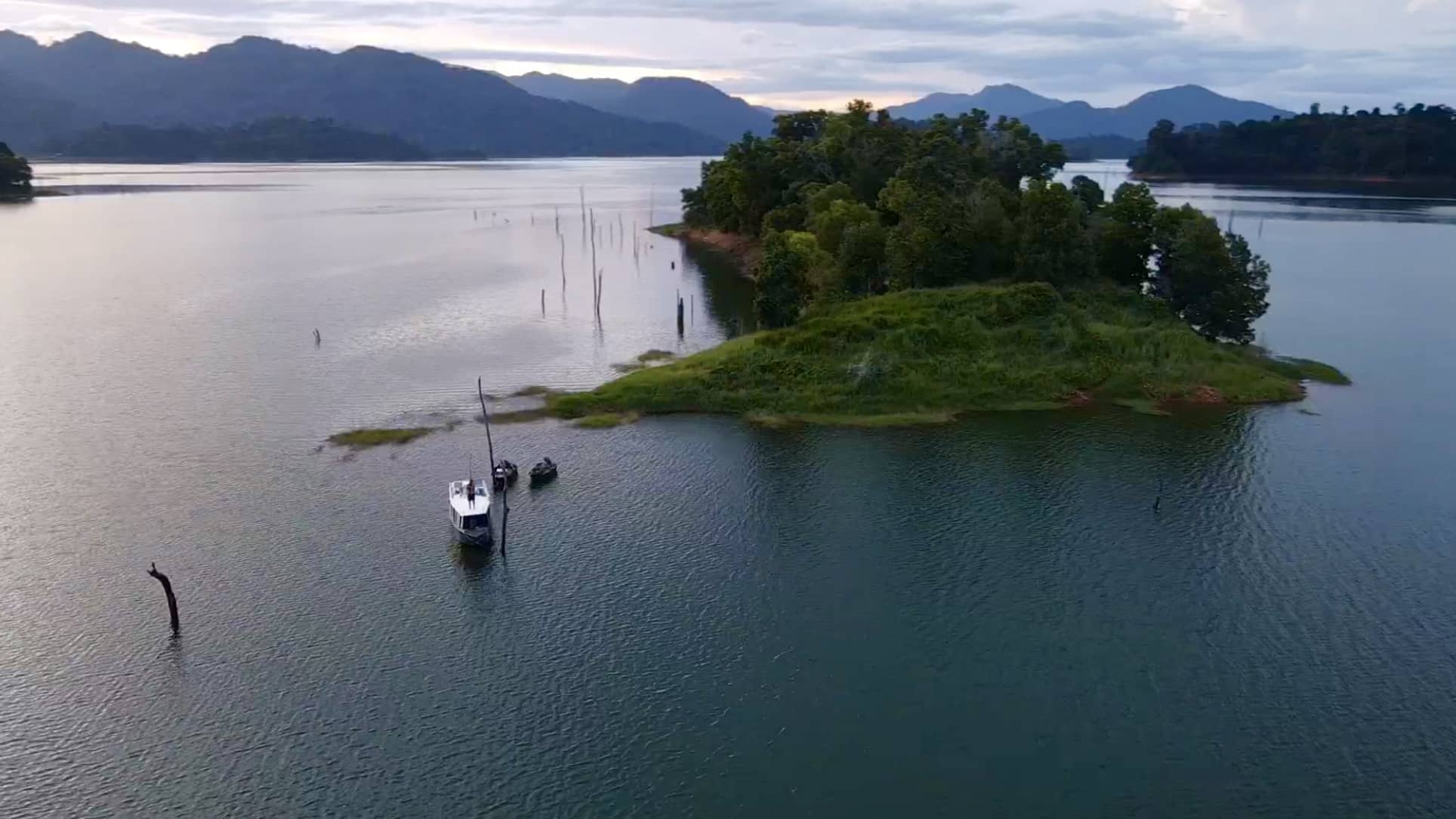
POD view of the lake. I’ve been watching the rugby.
Apologies for any typos. I'm still waiting for my new phone and this one is doing my head in!