Martyn White | Thursday, 14 December 2023
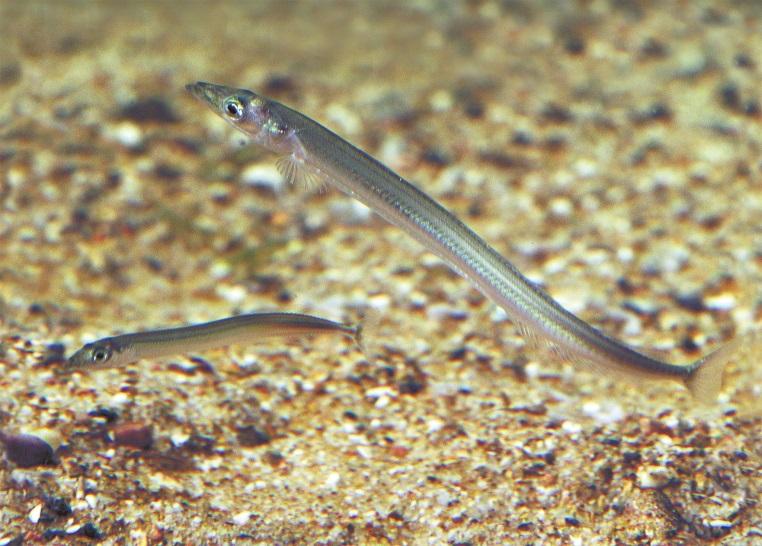
Sandeels, sand lance or whatever you want to call them are important and much imitated forage for all kinds of saltwater predators. It doesn't matter if you are fishing for seatrout, striped bass, blue fish or anything else, if sandeel live where they live then sandeel is on the menu.
There are all kinds of flies designed to match them, some are better than others. For my money the simpler the better is the approach on these, but it's pretty clear that not everyone agrees. A great many of the patterns are full of assorted materials, resin, corsair tube or mylar piping. Not only do all these things make for a lot of work to imitate a very simple bait, they don't really (in my opinion) make more effective flies. They do work, but not better than simple flies. The saving grace is that there's plenty of stuff in them to give an angler confidence in the fly. That's something that is not necessarily the case with very simple flies like Ray Bondorew's marabou sandeel or Ken Abrames' eelie. Both flies are deadly for imitating those small sandeels, they're full of movement, the right size and thickness and have the right blend of tones which can be easily tweaked to match local sandeels if needed. But they don't really fit what many people nowadays seem to imagine a fly should look like. They're just skinny little matchstick shapes of feather and pearl with nothing much else - except a little bucktail on the eelie - no eyes, no gills, no collars, no blended flash or anything else. Just simple, fishcatchy goodness. But they're just little sticks. With little to catch the angler's eye and make them confidently pick one from the box.
And confidence is the issue, it's hard to fish something that you're not confident about effectively. For a lot of people it's hard to be confident in matchstick sized flies when confronted with the scale of ocean coastline, especially when blind fishing. It's a bit different when fish are chasing bait up onto the shore and you can see it to copy, but that's not the norm. So, there is a temptation to fall back on bigger or more "realistic" patterns rather than persevering with a fly that doesn't look like much. The problem I have is that so many sandeel patterns, especially some of the ones from Scandinavian seatrout guys aren't actually more realistic. They look cool, and appear to us like a fish in the air but don't necessarily fit the prey image that our target species may key on i.e. a wee pearlescent, wiggly matchstick about 1/8” thick. I think most of the time they probably elicit a reaction bite rather than a feeding response. It might not matter most of the time, but it might some of the time.
I think the simple sparsely dressed fly, is a good thing to persevere with for most species. They are super effective if they get time on the leader. They are quick ties so you can easily put a season’s worth in your box and don’t worry if they get beat up or lost. They also help your fly tying get better, there’s nothing to hide your mistakes and you really need to make sure you get the proportions right. You can’t be throwing on loads of superfluous thread wraps and extra materials if you want to get them skinny enough. These are things that can then inform your other, more complex patterns. If you fish the cold saltwater, it’s absolutely worth tying these little patterns and fishing them.
For those who are interested there is some good info on both the flies I mentioned on Current Seams which is far more accessible/affordable than trying to chase down one of Ken Abrames’ books.
https://currentseams.com/2021/07/06/ken-abrames-eelie-the-sand-eel-pattern-where-thin-is-in/