Chris Avery | Wednesday, 9 September 2026
Down on the Willow brook it’s been a challenging summer for both fish and fishermen.
Firstly someone upstream appeared to be messing about with the levels , we were plummeting on the gauge to very low flows and then sudden spiked recoveries. As the heat of late spring grew, this became more concerning. We are not a freestone river at the mercy of the mountains, but a long slowly gathering midland channel with three sources at least, which then flows through a few stately homes that dam the brook for ornamental lakes and have sluices that can regulate the flow. Therefore levels for us don’t change dramatically.
These lakes have been a blessing in the past when the Corby steel works were using our stream for cooling. Within these almost still waters the toxic particles dropped down and settled into the silt in the beds. So downstream in Willowbrook those lampreys and gudgeons and whatever other fish lived in the stream, survived the toxic onslaught. These lakes are now however a curse, as they seem to behave like large shallow solar panels, heating up the water before it regains the flow downstream to us.
The environment agency were called and some portable gauges were positioned in various areas upstream to see if we could locate the source of the problem, the days got hotter, the gentle breeze became drying winds, and there was no sign of rain or recovery in the forecast.
As the guy who has the label of habitat coordinator I could only stand back helpless and look on as this drought set in, and this increased energy meant we were treated to increasing numbers of endless sunny days and a heat that cumulatively pushed passed the previous records in terms of duration and averages.
Looking on, ringing hands, and powerless to react in any meaningful way to save my stream and its precious inhabitants.. praying that the perfect storm, a thundery deluge of summer showers didn’t turn up and deliver the coup de grace.
On the 21st of June was the start of our reaction to this growing threat. At 8am in the morning, the coolest period of the day in the Brooks water, the temperature reached 19.4c, already putting Brown Trout under stress. With a forecasted weather for the following week hinting nothing but sunny days and the start of a prolonged heat wave. Reluctantly the message went out to the club members… “Fishing suspended”, before we had even hit the 20c [ 68f] our prescribed cut off point.
At 20c [68f] growth halts, the Trout get excitable and agitated and any fall in oxygen and rise in ammonia will lead to death.
Thankfully there is also acclimatization to take into account, the temps they can withstand and the duration is dependent on what they had been living in, during the past 48 hours. So a gradual build-up of summer heat is more tolerable for our spotty friends.
It’s now, as I write this, passed into September and it’s looking like we might at last be able to open up again for morning fishing, as I personally breathe a sigh of relief that we’ve come through not just relatively unscathed but a little more optimistic for the future.
A recent series of patchy skies and some heavy showers have brought the levels up and yet it’s still running remarkably clear. The temps are now bouncing between 17c [62f] and 18.5c [65f] with each shower and run off adding more heat before cooling off…. But the trend is going down and we’ve dodged the bullet, and I now marvel at mother nature, and how she seems to improvise a solution.
Firstly that bullet we dodged; the perfect storm. I have spent a summer patiently correcting people, seemingly sagely,quoting what we desperately need for our rivers and streams,is a really good down pour. It was the one thing I dreaded most. Let me explain:
The highest water temp I measured this year was 22c [72f], that’s .5c below where the available oxygen is so low that Trout can only survive the conditions for a limited amount of exposure.
( 22.5c -25.3c [72.5f- 77f] is a 7 day exposure limit ( Frostand Brown 1967).
When we are talking 27c [80f]we are talking a few hours survival at best. The highest I’ve recorded in a previous summer in Willow brook is 25.1c [77f} and this looked to be a hotter summer ahead and a heap more problematic!
When I measured that 22c [72f] , the soil temp on the bankside was 32c [89f]and two inches down in the soil it was 28c [82.4f]. So an afternoon stormy summer deluge landing on those banks, heating up as it runs off the fields into the brook could drive up a sudden spike of heat that would rip the remaining available oxygen out and cause a mass fish kill. It’s a pretty rare occurrence in the UK thankfully, but happened a few years back in Cambridge 30 miles south of us. What looked like a typical sewage spill was a summer storm falling on hot banks.
With a remote population that is genetically foot-printed to our waters there’s no restocking option… once they are gone, they are gone for good.
No, what we needed wasn’t rain, it was a week or two of overcast days.
The next mistaken, seemingly ‘common sense’ judgement I hear from fishermen, and that I spent my summer correcting is; “Well as its now getting too warm, I’ll just fish in the evenings, when the temperature goes down a little”. I also read this on forums and in magazines and hear it on YouTube and podcasts.
Wrong again!
I monitor our temperatures by two methods; spot checking during the day and taking relative measurements from both ends of the fishery in quick succession. The other method is data loggers; two instream thermometers taking readings every 15 minutes 365 days of the year. Both methods concur that a temperature taken at 4 pm on a sunny summer afternoon will be several degrees higher by the evening and peaking by midnight. The stream is heated by sun’s rays heating up the river bed, those stones and gravels then continue to warm the waters even as dusk draws in. And the coolest readings are taken between 8am -10am.
So when I allow the fishing back.. it is firstly morning fishing. 16c ([61f] is the magic number that when returned to that in the late afternoon/evening, full fishing access is opened up again.
And conversely the evening fishing is restricted firstly, along with reminders about minimum stress fish handling …. Cruel and a little harsh as it usually coincides with great evening caddis hatches and the BWO’s, and normally when I am on a roll collecting scale samples to monitor growth rates and have nearly finished the survey.
But it’s not all doom and gloom….
During a few of the hottest days, the thirty pluses, I have taken guests in wearing shorts for a walk up the middle of the stream to cool off. Under the canopy in the clear running waters it’s quite the loveliest way to escape the oppressively hot day baking those parched fields just a few yards away. The amount of Damsels; Dragon flies; and Butterflies; dance flies; olives; and caddis; was quite staggering.. and in the gin clear waters in the clearings amongst the soft carpets of Ranunculus, the stream was teaming with fish of all sizes;from thousands of pin fry; shoals of Minnows; silver Dace; and the odd rather chubby, looking Chub. It’s amazing how when you don’t have a rod, those fish just seem to ignore you. I even took myself swimming in a deep shaded pool on a few scorching days, and being in the water with the Dace, Chub and a few Trout they seemed oblivious to me with my lack of mastery of their element and my clumsy splashes. I think they realised I was no threat at all. And I’d forgotten just how madly minnows go for your bare feet and ankles when you stand still for just a minute, childhood sensations came flooding back from paddling in Windermere with a net.
But the biggest and most optimistic takeaway I have from this summer is that series of water temperature readings in comparison to the air temperature fluctuations. In the previous two hot summers that we have needed to shut down the fishing, although not for such a prolonged period of relentless sunshine and the very hot days, that we have had this year. This time however the water temp has not reached the peaks of 24c + that we have seen in those previous years. Its sat stubbornly around the 20c mark, despite the really hot peaks,those daily fluctuations haven’t been so dramatically reflected in the waters.
The immediate visible change is that the countryside around is more parched and barren than previously encountered, like driving through the African savannahs to our little oasis, assigns the lush green vein of brook running through this desolation, an even more dramatic counter point than ever.
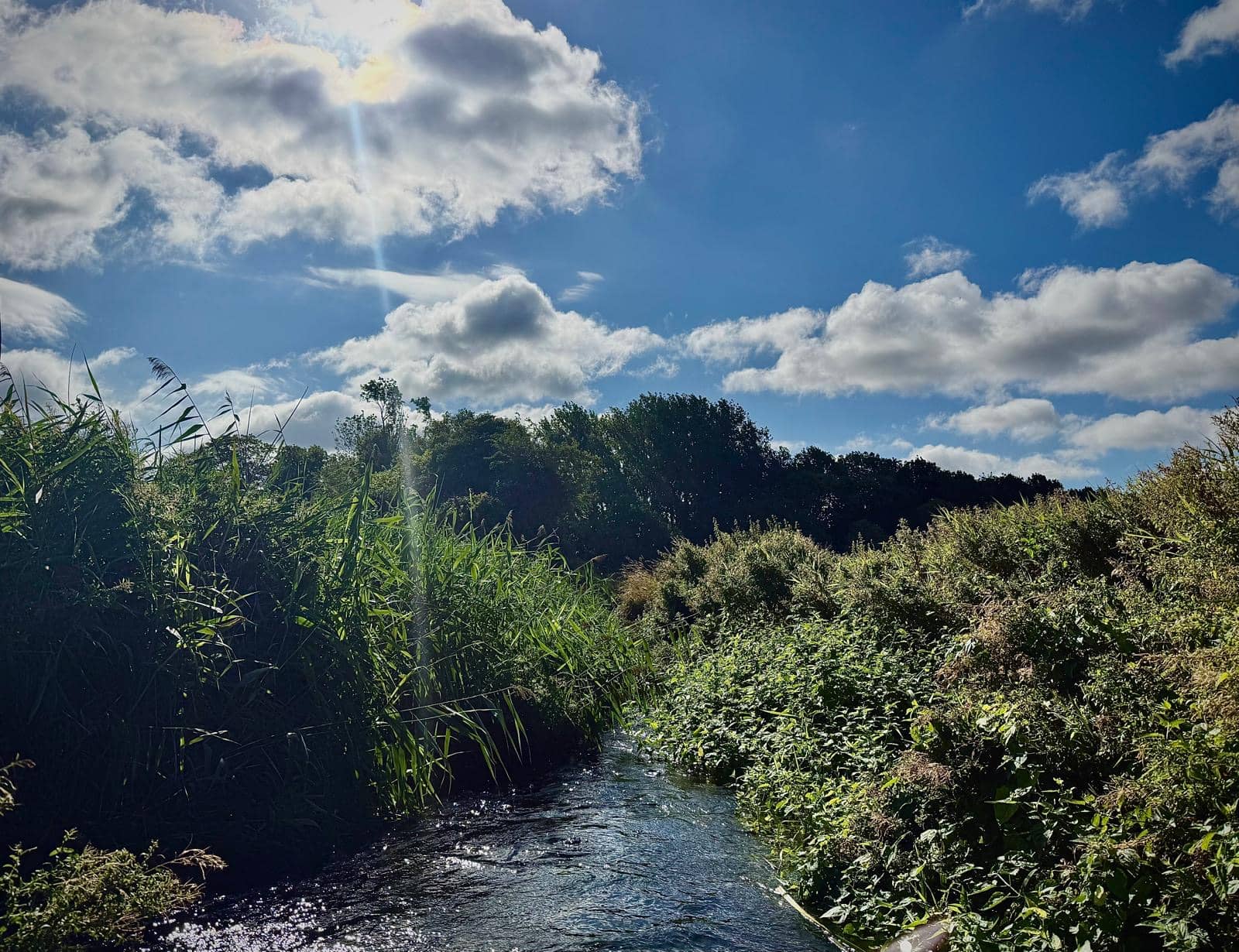
However inspecting more closely on these wades upstream, you realise that those bankside and marginal weeds; the straggly tussocks of reed canary grass, the tangled vines of Bindweed, Woody Nightshade, and red necklaces of Byrony, weaving into the tufts of Sweet Bethony, Mint, and Meadow Sweet. Have all, this year flourished like never before, with the extra light and heat.
The weight of this mass of herbage in the areas of open banks has pulled them down and they are laying like mats on the surface from both banks; in some places covering at least two thirds of the water surface and more importantly shaded most of the river bed from the radiant heat of the direct sun. The higher growth back on the banks from the wild grasses and giant willow herb, normally by now battered down by sweet summer rain, is casting further shade and restricting the direct hit on the river bed by a few less hours.
Back at home I keep the cottage cool by blacking out the curtains on the sunny side of the dwelling. Mother nature it seems has reacted by twiddling with the knobs and levers and found a way of creating a sun screen for the Trout, and sorting out our mess, yet again.
The tightest of tight lines and especially dry waders for the coming autumn!
All the best to all
Chris Avery