Paul Arden | Monday, 7 September 2026
I’m writing this FP while on the indoor bike. A gentle 90 minutes. Last week was intense. 15 hrs. This week I plan 20 hrs or thereabouts. I’m definitely getting there. Swimming is coming together. Bike is strong. Running is good. I’m looking forward to the Ironman in 11 weeks.
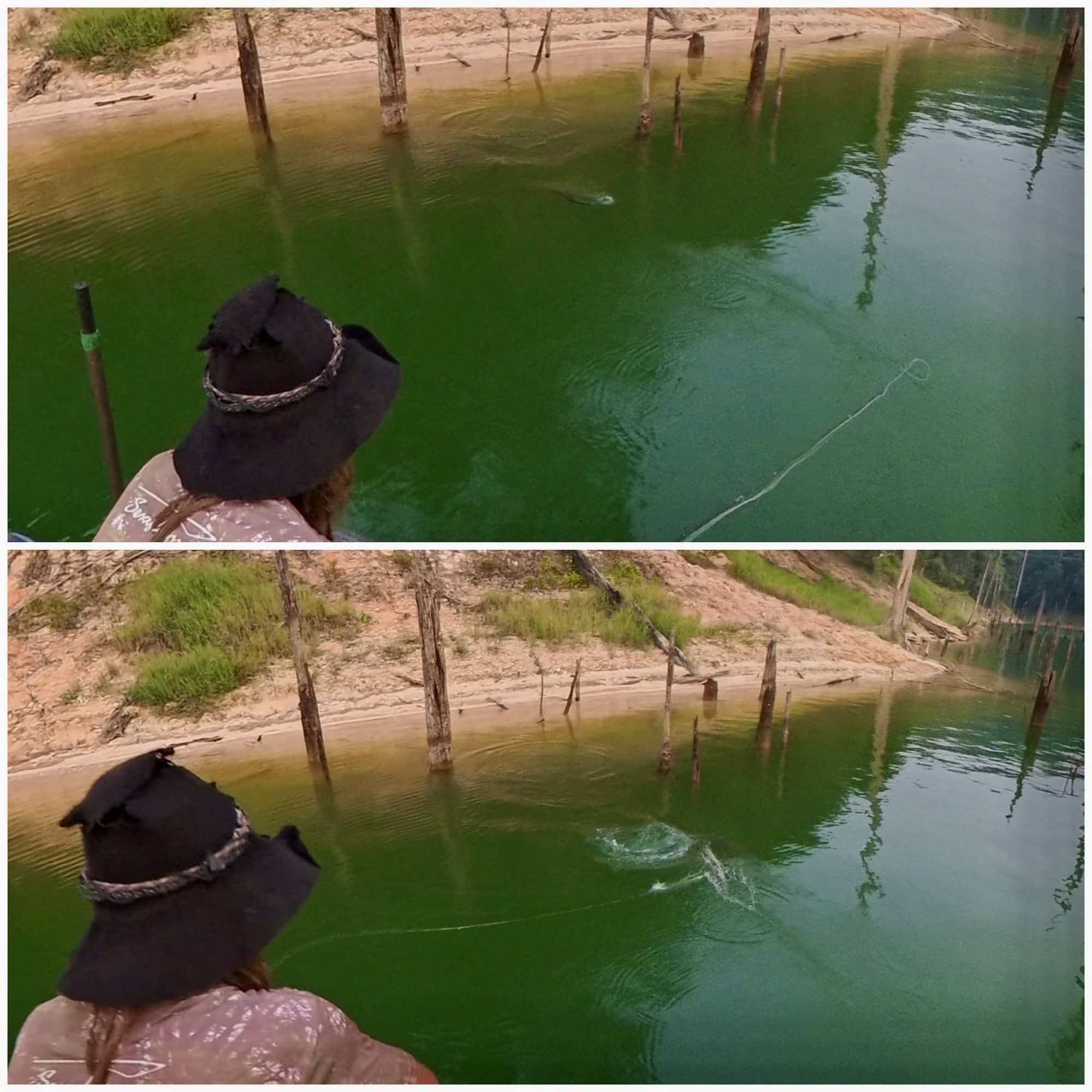
It’s been a good week for Tornado sales and I have some new students too. Now if the bloody fish that ate my fly this evening hadn’t swum around a stump and left my fly there, then life would be perfect!
It’s been a challenging week of fishing. Along one shoreline I found 4 sets of babies in one evening. Nothing ate. Largely my fault but not completely. I ran the same shoreline the following evening but the fish had figured out the game. So a few chases this week and one eat. I wonder if a full day spent fishing would be very much better?
I’m sure I’d get more shots — so probably. But I’m currently happy fishing 3-4 hours in the evenings and with the occasional morning sessions. It’s not the right time to drop everything and go fishing. As long as I get out to fish the evenings then I get to keep what’s left of my sanity.
I do have a video planned of long distance switch and Spey casts for advanced casters. I’ve gone through it many times in my head (while fishing). I’ll try to film it today. I think it will be useful for some of you. It’s not information I think that is well understood or widely known and I certainly don’t teach it to everyone. Eventually yes, but they have to be experienced Spey casters first.
I’d like to get back into the Sexyloops video manual and include more advanced casting drills and training. We are not all beginners!
(I’m off the bike now. It’s Battleship Green Curry time and then Bed!).
So back to topic. I’m largely self-coached as a triathlete. I do get irregular swim coaching in Kuala Lumpur. And I’m part of an online group that has a structured triathlon training plan. I see a lot of parallels between triathlon training and flycasting training. Having measurable and tangible goals I think is important to both. But equally important is training structure. Just going out for a run or a cast doesn’t really cut it and isn’t the best use of time.
Every session should have a purpose. That doesn’t mean it can’t be fun; it has to be fun! But what it does mean is that we should understand the session and its function. I always try to help my students plan this (usually not to the minute, but sometimes!).
Fly casting for me I see as being very broadly four cornerstones: Accuracy, Distance, Speys and Presentations. Accuracy includes all planes, loop control exercises and Shots — not just targets. Distance includes wind, backhand shots. Speys is Speys… until you combine it with Presentation Casts! And most things should be to a target. So it’s a pretty broad way of looking at things and if for example we make a Single Spey to a target at 75’ with an aerial mend around a hoop at 40’ then arguably it’s all four!! (But let’s keep that one parked under Speys!).
If you are self-coached then you need to figure out how to structure your sessions. To warm up or not? When and where to include loop control drills? And what is the overall objective of the session? I would recommend videoing yourself regularly for at least some of the session. And best is to keep a record. Then, over time, you can see what is improving and what is working. Not that I’ve been very good at this myself in the past but I wish I had been! It would have certainly helped.
I wish I had been formally coached by someone like me. Knowing what I know now I would have saved myself very many years of slow or plateaued progress. And I would have been a hell of a lot more competitive than I was. I did a few things right, mostly be accident, but I fell into the trap that most people do and just worked on developing my casting and not worked backwards from competition to figure out what needs to be done to be competition ready.
The exact same process also applies to fishing. Let’s say for example you are going on a Tarpon fishing trip. 4-6 weeks out you should undust the tarpon gear. Use the same leader that you are going to use. Take the same fly and carefully cut the hook bend away. You can do some loop control drills to familiarise yourself with the tackle but just going casting for 30 minutes doesn’t simulate the cast to a tarpon off the front of a skiff. You might get one shot an hour. So that is what you need to simulate. Fly in hand, pause, taste the imaginary salt air. Have your targets laid out. “60 feet, 10 o’clock”. See the fish, make a very deliberate shot. Strip, strip, strip. Remember to strip set. Pause, now get ready, reset and repeat the process. Make half a dozen shots like this. Then go back to your drills.
The most important shot to train is the very first shot. I would actually make that first shot the very first cast of the day, before warming up. The more often you do that the better you will be prepared. That’s really the cast you are training.
Right: swimming, Malay language class, fishing (yay!), then an evening casting lesson followed by yet another exciting bike ride! Have a great week!!
Cheers, Paul