Martyn White | Thursday, 14 May 2026
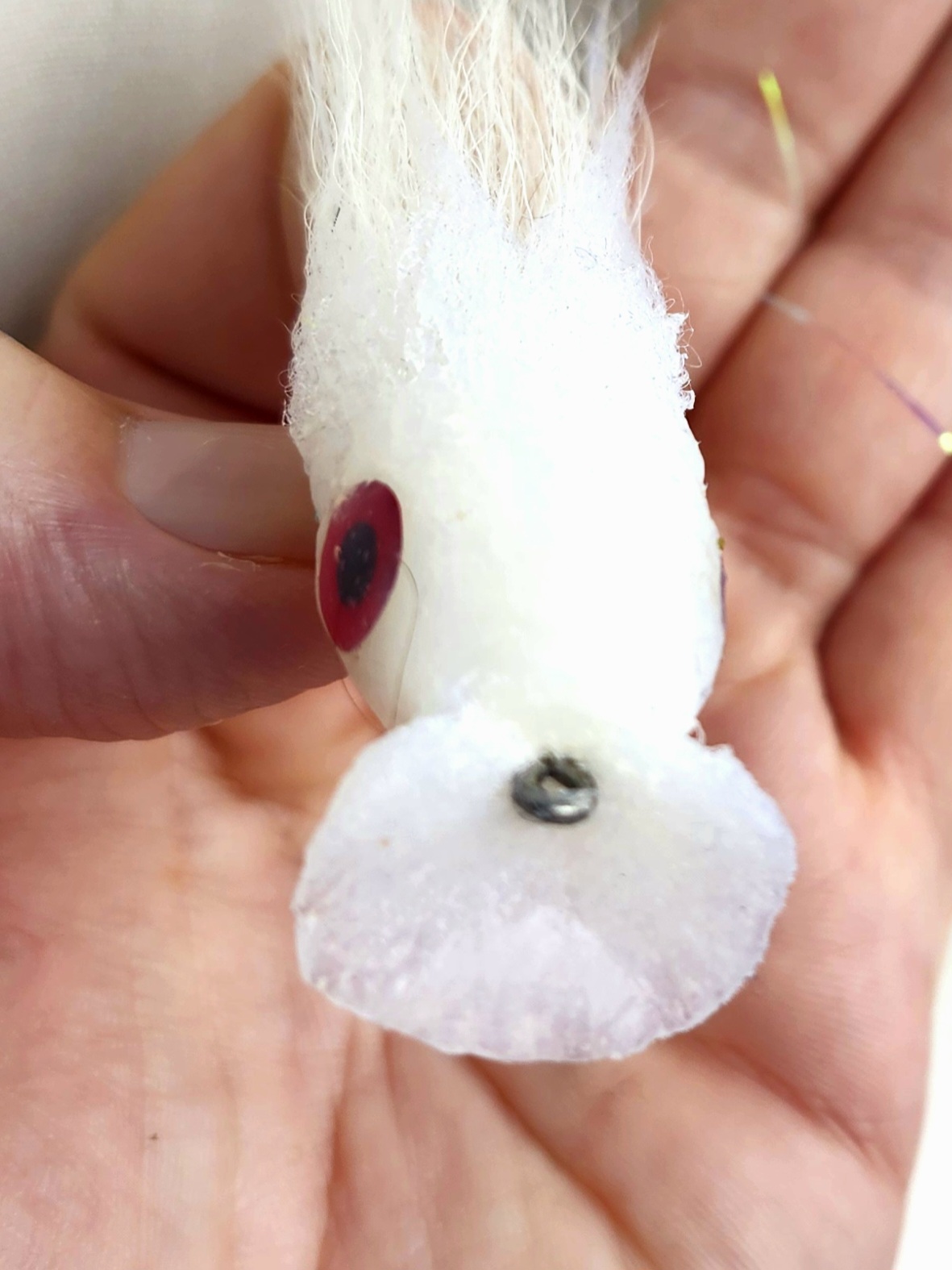
This week’s fly, the Pop-lip, is a bit of a follow up on the siliclone from a few weeks ago. The main reason being I cleared out my bass box and realised I needed to replace a few.
They’re not the easiest pattern and take a bit of practising to get right, but it’s more than worth the trouble to learn and get right. The action they produce is incredible and offers the fly angler a real analogue to the conventional anglers crank bait. It’s far better than those plastic lips and discs you can buy to tie on or slide on your leader. Obviously we can’t put massive diving lips like deep running cranks on our flies but we can use fast sinking lines to achieve depth, and we don’t need to sacrifice wiggle in the fly.
Here's the pattern:
Hook: Saltwater hook, ideally a model perfect bend.
Thread: Clear mono
Tail/body: Bucktail and flash
Head/lip: spun fleece coated in silicone
Eyes: Flat tape.
You can add ostrich herl, longer hair like goat, saddle hackles or other materials to the tail/body in order to gain length or get a more sinuous swimming action.
Bury a rattle in the dressing if you fancy it, it definitely helps at times. You do need to think about how to put the rattle in though. The head is the safest place to put it, but it makes it more tricky to spin the wool evenly. It can be lashed between the bucktail ties. It’s easier when tying but if you’re likely to encounter hard structure this is a good way to lose the rattle. Just this week I bounced a poplip off a container ship and it came back sans-rattle!
The most important thing when tying these, I think, is not finalising the lip shape at home. Just get it to the rough shape you want, but always leave it bigger than you need so you can trim it down on the water to make sure it tracks correctly and to tune the swimming action-narrower lip = tighter action, wider lip = wider/slower action. The POD fly is ready for testing but will probably loose a good 10-15% of its size in the final trim.
Don’t think they’re just a saltwater option though, they’ll work for anything that eats other fish, smallies love them, trout love them, seabass love them, pretty much everything (probably) loves them. Tie some!