Chris Avery | Wednesday, 22 November 2023
A journey through spaces and time, down to the sea.
107m above sea level
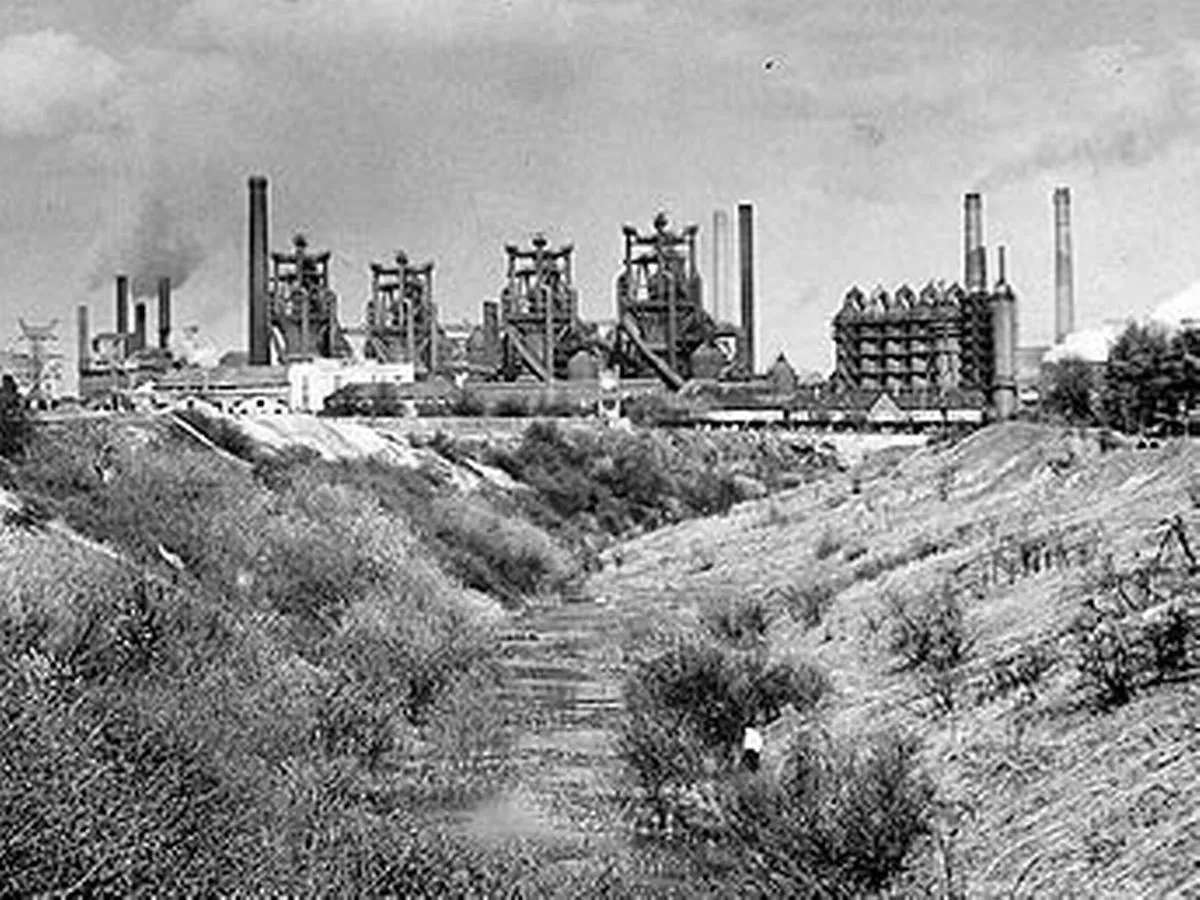
Emerging into this world only 12 miles to the west. A scattering of springs from in and around the grimy old town of Corby. Seeping out of the impervious stones into a series of tiny veins tingling through this dreary land of neglected factories and WW2 US airstrips and new towns, passing by tumble down tin and cracked windows across wide dusty, now barren spaces that are neither pasture, nor meadow, nor park. “Wasteland”, “Uninhabitable” “Brownfield” they are christened now. It’s bleak.

One source, splutters up surprised into patchy daylight near an old slide and the faded swings in a mud or dust, plastic bottle and bag littered playground, screened from human eyes now by the growing neglect of the emerging leggy saplings entwined and impenetrable within the Brambles and Blackthorn scrub in this musty dank hollow. Architectural entropy reverting to wild Nightingale heaven, for a while or more..
Those laughing playtimes, long passed, and the innocence lost. Voices replaced now by the occasional creek and squeak of rusting swing chains in the breeze, and of the clacking, clattering seats in the wind. But our trickle continues through the lost hopes, industrial strife, and redundancies. Unfazed the waters tumble along past the Nettle patches, and laburnum scrubs and rubble, onwards to the farmlands beyond and off on its destiny with the North seas.
98m above sea level
Another source first appears as a pond in a field on an old farm that resisted time changes, it seeps over the banks and trickles out across bare fields as a lush green gash to Geese wood, where lost in heavy undergrowth for a while before re-emerging, chasing along the side of a farm fence in a narrow deep run, a green strip along the ploughed arable land by Warren spinney and down past the Rookery wood.
115m above sea level
A trickle blinks into the daylight, fenced off behind the back of a new housing development between Furnace way and Steel Road, close to the Crucible way.
Un-heard, ignored.
Emerging as ever it has, undeterred by the “progress” that failed to stem its bleed. From far under a recess beneath a concrete slab designed to cover away, beside an old brick wall it bubbles out in the shade of a dusty laburnum bush, heralded from its perch above by a little Robin that sings daily “I am here, I live” !
As its ancestors always have sung, here, from long back, long, before men arrived and cleared this valley.
Then these Robins sat under the forest canopy and sung, close to the wild Boars snuffling for acorns beneath the oaks, ready to dart down and grab any unearthed grub or worm from the fresh mud amongst the clutter of tusked snouts and the trotters. What minerals lay below the ground then mattered only for which trees prospered and what food they provided for the animals and birds..
Now these Robins with no forest, sit and sing close by any human with a spade or fork bent over grubbing and weeding in the back garden. Drawn in closer by the activity. The natural aversion to humans forgotten with feed and need, a bond created, and from one side it feels a friendship made, the other, a weary watchful tolerance and a sweet melodic song.
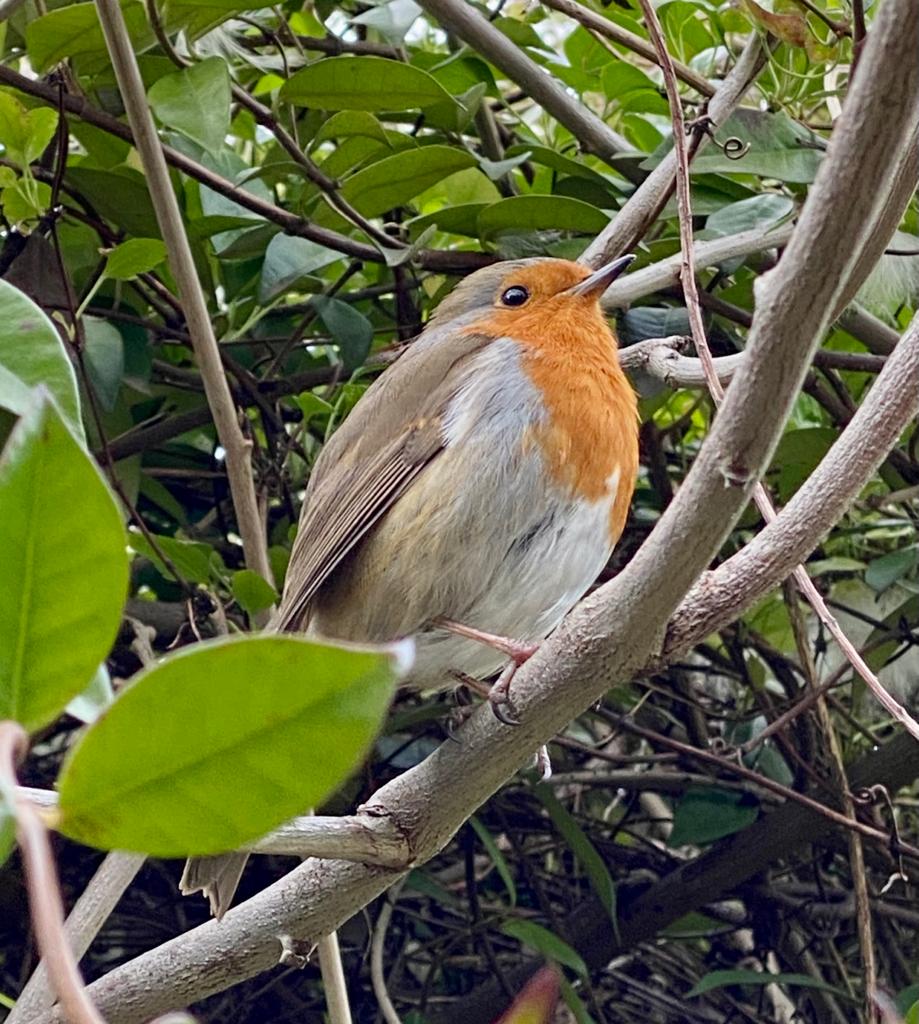
I regularly get Robins perched on a nearby spade keeping me company, chirping encouragement it seems, I’ve even had one perched on the heel of my wellington boot getting as close as it dared. I often toss them worms, that they studiously ignore preferring smaller secret treats.
Working in one courtyard garden in London’s Chelsea, an American client surprised me by saying he often watched when I was working and was amazed how the Blackbirds and Robins trusted me and always turned up when I arrived.
Surprised that I was being watched and surprised as communication with the gardener was usually via the butler!
I told him that those Birds just think that I’m a wild Pig. He looked quite appalled, and moved away before I got chance to justify the statement. We rarely spoke again.
122m above sea level
The highest of these sources is in a field, a quite barren field but when viewed on google maps you can immediately trace the emergence of the water the line by the thick rich line of life. Shrubs and trees marking its banks. Many of these trees are Hawthorns, white in bloom when the satellite passed high over spying from the sky. This spring meets the Brook at Deene Hall.
103m above sea level
The biggest of these trickles (well, big in perspective of tiny trickles) spills out of the dark into old bricks, crumbled concrete and failed rusting reinforcement bars. The babble from the rubble deep in the middle of the virtually defunct old steel works, near the rectangular old holding ponds it once fed and flowed from.
In its persistent path it brushes away dust and grime along its course and exposes occasional beds of glistening gravels, creating small gardens of mosses and tiny spring green ferns on its diminutive damp banks. It meets hollows, that become little pools, as it tumbles and gently erodes and engraves it path downslope as nature reclaims the concrete around.
Finding solid resistance it changes course, steered wide. Or gradually worries away, re-discovering its line over time. Time for a stream, mind you, in a measure that mocks our three score and ten! ,
At another resistance, dropping underground again to emerge behind the towering bleachers of a speedway track. All this time gradually gathering and growing as new trickles add to its presence and strengthen its resolve to meet those seas.
By the short distance taken from the factories of Man, under the roads of man and across to the fields of Man, it becomes recognisable as a stream. A brisk 15 minute walk away it enters farmland. It has gained, function, permanence, and respect. It now must be forded or bridged or even diverted, its progress and persistence is inevitable and on the maps of men it finally earns the title of the ‘WillowBrook’.
The old foundry was set down in this place, convenient for fuel, with the ready supply of rusty red ironstone for the workers cottages. By the Roman iron pits. Still full for plunder now with Victorian engineering and machines, and of course, by this essential source of water, the Brook, to cool the new steel, the furnaces and cauldrons, and to carry away particles of the waste; (shame; degradation; and the filth).
Life downstream it could be said, no longer stood a snowflake in a crucibles chance of persisting.
The once fertile brook transformed to an open stinky drain carrying the greasy dark stain of the industrial age seawards, tainting, deforming all it brushed as it slid past with its heavy metal poisons.
Dark smokestack days, Toxic terrible years flowing, corrupting, rusting, eroding, and then, then someday that direction ground to a halt, and the waters looped back repairing, renewing and rinsing clean to become a fertile Brook again.
18m above sea level
Down here the Willowbrook that we are now viewing, back downstream in Fotheringhay from that Pheasant clucking coppice of trees on Martins farm.
We know it existed here or hereabouts in those Tudor times of ancient maps and crinkled dusty documents…. before that we can only imagine its path as it blindly stumbled and felt its way along these gentle slopes.
Slopes shaped under the grinding base of an enormous Glacier that spread for many a mile, rasping the lands flat with entire shorelines of rocks snapped and gathered as it ground its way southwards towards its melt, tumbling and polishing the rocks it carried, smaller, rounder smoother.
Warmth returned, the glacier melted, drained away, and with that life returned, creeping up from the south, carried on the winds. Germinating in the beached gravels and pebbles, between the boulders.
New roots anchor and bind. Rains and ice erode and split stone. The briefly alive tumble down and disintegrate transforming with the dust and grits, and the new soils created.
Waters carried more grits into the valley and down those slopes, in time the soil became deeper, richer along these waters. The pebbles and boulders and gravels were gradually carpeted over by a thick generous dollop of life. The world turned green in the valley and I bet the sound was sweet.
In Fotheringhay the Willowbrook flowed close by the birthplace of the Bad King Richard of York.
Years before his demise for want of a horse, fallen in Bosworth field, yet another of his battles in vain. And then interred not under a rainbow but beneath the eventual tarmac of a future car park in the busy bustling Leicester’s city centre.
His birthplace though 40 miles south and east, in the royal palace at Fotheringhay, then the administration centre at the heart of the House of York. The brief rulers or Britain.
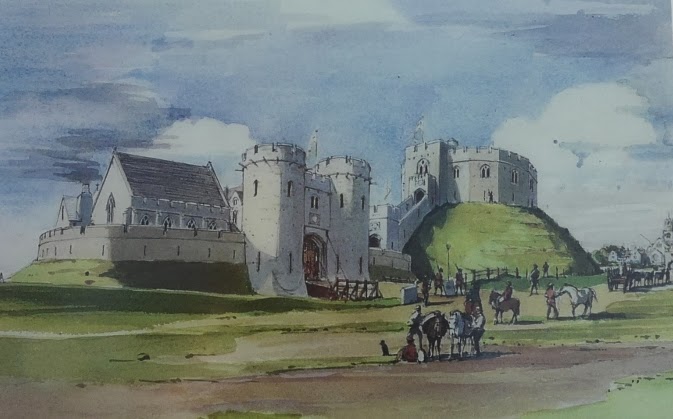
First built as a castle in 1100 after these hunting forests were discovered by the conqueror William after his ‘1066 and all that’, was put to rest, and his fun times began
Then a primordial forest of Red Stags, Boars, Beavers, Bears and Wolfs amongst ancient trees.
Now on these lands only a few, now very ancient, oaks remain peppering the cleared lands.
Old and deformed they were when spared the chop as the Oaks were harvested to build a navy against the Armada.
Now Stunted, thickened, truly ancient and weary ,a few branches and twigs remain crowned on the trunks, as each spring a few less leafs emerge.
The Norman Castle, that became the palace stood near by the crystal-clear waters of Willowbrook on one side and the slow muddy depth of River Nene on the other.
In those days it seems the Brook was the preferred choice for water and was named here ‘Washbrook’. A millstream diverted towards the castle to make the Pond, contained wooden racks where clothes were washed. The Great Pond itself an ornamental lake that fed water into the wide outer moat that surrounded the lands around the castle. Protecting the orchards and gardens, the chapel and lodgings and the outer gate house. The inner moat that protected the battlements of the Motte and Bailley type fortification.
Here a short gallop to the border of the royal hunting forest where trees gave way to the fertile fen lands farmed from back in bronze age, and with the lands around the castle cleared and farmed, it was a land of plenty.
After Richard's death and the end of the York dynasty, the castle was passed on to Henry VIII who neglected it and gave it to one of the wives.
Fotheringhay’s fall from grace was swift, it was now considered to be ‘the middle of nowhere’, and remote from civilisation and, from Scotland or France. So, it was the ideal choice for the Scottish heir to the British throne ‘Mary the quite contrary’ to be finally imprisoned there, remote from her sympathisers.
The Brook renamed the Millbrook when the Queen of the Scots spent 6 months imprisoned there . A mill then straddled its waters just downstream of our old stone road bridge. For a few yards of wading down there deep in the shade, your feet are on the solid stone sets of an ancient stone floor as the stream runs between banks of huge rectangular blocks still baring the masons chisel marks. Here those waters diverted to the castle grounds and its garden.
I guess this was the garden of “cockleshells and silver bells” in the nursery rhyme. She wandered through with her “pretty maids all in row”.
And I also guess, she would have sometimes stared longingly out over the lake to this sparkling brook, perhaps dreaming of flowing her away too with its waters, to the North Sea, across to the safe embrace of catholic France.
The flow of the cascading clear waters, babbling, whispering on the breeze past the ramparts, through the bars of her confinement and her eventual beheading in the grand hall of Fotheringhay castle.
I hope these lovely waters gave her some solace in that lonely, treacherous time.
60 years later the castle stonework was pulled down. Fotheringhay a small village again , with a river, a brook, and huge regal church!
Journeying back upstream of us, this Brook crosses the boundaries of three old stately homes, which played a crucial role in the present state of the Brook as a Trout stream.
25m above sea level.
The First an old Jacobean Mansion and hunting lodge, Apethorpe Palace holds a significant place in English history because of its ownership, and its role in entertaining the Tudor and Stuart monarchs by the hunting forest.
Owned by Henry V111, passed to Elizebeth 1. Later lived in by both Charles1 and James1.
Charles was here before his fall from grace, his trial and execution by the parliamentarians ..
Passed on to him though by James I, the only son of Mary Queen of Scots. Here, a few short miles upstream. The top end of the fishing club beats and a good day’s wading upstream from where his mother was beheaded. Its remoteness was ideal to protect him from his own scandal.
James set about extending the Palace suitable for his 'princely recreation' and 'commodious entertainment'.
One crucial detail was the secret passageway built between his old bed chamber and that new chamber created for his gay lover, George Villiers, 1st Duke of Buckingham, remote in the ancient hunting forest in the middle of nowhere, their scandal and illicit tryst was hidden.
Now nearby a mother Otter and her three pups, shelter in the safety of a Holt in the woods by the old palace, regularly exploring down to Fotheringhay and back.
The 730 acres of Apethorpe on either bank of Willowbrook, have more ancient histories still..
Neolithic burial mounds by the Brook, and evidence of clearing and farming from up to 6,000 years ago. One 30m diameter barrow mound right on the bankside and several others scattered nearby, where the bronze aged peoples were buried.
The Brook here cuts through the Jurassic deposits and limestone soil sweetening the invertebrate rich waters and makes rich farmland.
Then came 300 years of Roman occupation and on a limestone plateau on the north bank of the Brook, the Romans erected a large imposing villa on an area of 70 metres by 80 metres. The main villa with its heated floors, and the courtyards and out buildings and administration buildings , surrounded by 5 hectares of fertile iron age farmlands and looking down on the little Brook..
It is thought the brook would have moved produce and goods down to the main River Nene then out across the fens.
Even during the extensive landscaping of the Georgian period, the Brook itself remained a feature of the landscape and the design. Then in 1910 a garden designer proposed a dam constructed, and a shallow lake was formed swelling out the Brooks waters into the gentle valley.
This simple feature, so significant its effects downstream too, as both as a life saver, but, maybe a future menace.
52m above sea level
Three and a half miles upstream of Apethorpe is the old hall and the village of Blatherwycke. I don’t know what the name means, I only know that it is not a valid scrabble word.
It is very valid to us though.
In the middle of the C19 a group of Irish labourers, brought over to escape the potato famine camped on the north bank of the Brook here and by hand excavated a 58 acre shallow ornamental lake for the large hall. This again would be a fortuitous intervention and benefit for the future Trout stream.
69m above sea level
Then we come 3 miles closer to the source in Corby, Deene Hall was Medieval originally and then a Tudor mansion. 600years of occupation and constant changes., The park planted extensively with 375 acre of gardens and a small existing pond all linked by a stretch of the winding Willow brook.
First the Brook was diverted into a sequence of moated gardens in the C15.
A hundred year later the Brook was converted into a large formal canal that dissected the intricate garden layout.
Then came that Georgian period of powdered wigs, peasant suppression, and the thieving enclosures acts that created their parkland gardens. Influentially the European grand tours of these newly landed gentry, brought back ideas and inspiration.
Those Georgian gardens celebrated the natural tamed landscapes, copied from Italy and France. The existing English intricate gardens grubbed up and destroyed for the endless lawns. Mature trees dug up and moved across fields on huge, wheeled machines. Long avenues of trees planted to lead the eye to the distance, or up to the Hall. In the landscape, hills were created, follies and curios constructed, and small streams sometimes dammed up to make new lakes.
In 1746 The Willowbrook’s flow was interrupted here to create a new landscape feature, Deane Park Lake.
What was to become crucially our first line of defence against the future steel works and the growth of Corby village into a large industrial town.
To feed those large houses and the villages, a dozen or more Mills straddled the Brook from Corby down to Elton just 12 miles downstream it meets the Nene, or diverted some of its waters, to turn the huge wooden wheels and drive the grind stones.
Some mills still stand with wheels intact. Now just thatched homes and curios.
Others we find the old stone remains shrouded with foliage and roots, hidden from view from all but the nesting birds and the wading fishermen.
Villages grew round those Mills, and the waters, Blacksmiths, farm labourers, Grain merchants, Inns, churches, schools. Communities settled around the Brook.
Meanwhile as this was happening Blighty’s influence was growing globally.
At that as Britain was becoming Constable styled landscapes time, over the wide Atlantic, some troublesome colonial ‘Oiks’ in the new colonies were throwing 342 chests of good tea into the harbour at Boston!.... Really talk about a butterfly’s wing flapping in the rain forest.
That action for some inexplicable reason created a fissure. And with the ‘Dawns early light’ the spring of some new babbling nation, emerged, flowing down through time, growing as it flowed onwards past the last Mohicans, Salems’s witches, and Independence declarations.
Past the klondikes, and prohibitions, O.K. corrals. A westward expansion
Past Last Stands, Knee’s wounded, Wrathful grapes, and civil rights
Stumbling and cascading through Mexican wars, Indian wars, and civil wars,
Flowing with Goldrushes, Moonshines, and Watergates,
Meandering past John Wayne, Mickey Mouse, Marilyn and Mustangs .
The Jim crow age, the jazz age, the nuclear age, and onwards it flowed, to the crazy turbulent waters of Obama, Q anon, the Donald and onwards.
The trickle from the tea party became a flood over the land of the free, and the home of those brave.
100m above sea level
Those colonial Oiks would return with their flying Fortress’s and B52’s and the 401st Bombardment group (heavy), made the concrete runways near Corby to take off on their ultimate flights. Bombing raids over Germany, the runway Deenethorpe, massive and long deserted now, the concrete cracking and nature reclaiming, a small spring appears and trickles down… another small source of the Brook.

On each of those three large halls and Palaces, These very unnatural lakes would ultimately protect the lower Willowbrook from the spewing venomous discharge of the foundries and the growing new towns, the expanding villages, and the Tarmac and concrete run off.
Heavy metal toxic wastes of a Steel industry at its peak, haltered in its downstream progress of the Brook by these still water meres’, The heavy toxic particles carried in the current meeting these quiet still waters, gently settling down to the sludgy lake beds, over the years burying the harm deep in the gathering silts constantly flowing down from the farmlands.
Life down-stream of these meres was shielded from the ravages from that ‘Progress’ up-stream.
As long as nobody dredges those silts and releases those toxins into the waters, we remain safe, but there have been some close calls.
Sadly, as the climate warms, these friendly benevolent Meres may ultimately prove our downfall as far as wild trout habitat is concerned. The large open surfaces as they get shallower with more siltation, I suspect, are now functionally huge solar panels warming the waters to ever higher levels each season, for longer periods, stripping the water of oxygen.
We have twice now suspended fishing as the water temperature has got above the healthy threshold for Trout…..but I have a cunning plan!
17m above sea level
After 16 miles of flow dropping 105 meters (345 feet). At the ruins of yet another old Mill, the clear waters of the Brook at last mingle with the muddy flow of the Nene to take the last 55 miles journey to the North Sea.
My very best to one and all
Whinging pom.