
Paul Arden | Tuesday, 14 December 2021
If you are anything like me then you’ll have had a boots problem ever since you began fishing. Your typical fishing boot fits like a tugboat, is uncomfortable in doing any sort of mileage and most fall apart after only half a season of proper fishing. I’ve actually come to the conclusion that most fly fishing gear is made for anglers who only fish 20 or 30 days a year, ten metres from the car, and not for the driven anglers who try to spend every day fishing, trying to cover as much water as humanly possible. Certainly, when I used to spend half of the year hiking all over the New Zealand mountain rivers, typical boots would last me only around 3 months and many not even half that.
My solution then, was to buy very expensive top-of-the-line hiking boots and cut 1/2 the sole away and screw and glue felt in its place. When I offered to help with the Sungai Tiang fly fishing project, here in Malaysia, I ordered an industrial-sized quantity of felt (the minimum order), so that I could bastardise my hiking boots. It worked well, but the problem with this solution is that wet leather hiking boots are extremely heavy and can take over a week to dry. After waking only a few kilometres in wet boots, I get the feeling that my legs might drop off at the knees.
I was discussing this in a Board conversation almost two years ago and the name Bestard came up. Bestard manufacture, amongst other things, “canyoning boots”. I had no idea such a sport existed and so I got in touch with them to enquire about their Canyon Guide boots for fly fishing purposes. During the discussion, Mats, from the Spanish company, offered to send me a pair for testing… “it would be great to have a professional boot killer like you to test the boot.”
My reputation precedes me!
And I have to say, that actually got me very interested indeed, because you really have to be sure of your gear to send anything to me!
The boots arrived and then the entire world went into lockdown. Lockdown meant that the Sungai Tiang fly fishing project was put on hold while the Orang Asli community isolated. The only fishing I could do, was secret boat fishing on the lake and the only boots “killing” I could do, was walks into the jungle to place my camera trap (and walking around the supermarket once/week!). Not exactly canyoning or hardcore wading for that matter — and definitely no boots killing either.
But let’s jump back for a moment, to when the boots first arrived and my impressions then. The first thing that surprised me was how light they were. I’m used to boots that are heavy when dry, and lumps of concrete when wet. And here were some exceptionally lightweight boots. I could literally jump off the ground whilst wearing them, which was a complete impossibility with my normal 3 tonnes boots.
The other thing that impressed me, was the built-in gravel guards. I immediately thought, not only “that this is a great idea” but also “why on Earth do all fishing boots not have them too?” It’s logical when you think about it and I can’t think of any time when you would not want gravel guards. I had bought a pair the previous year for my jungle trips but the best solution back then — one that Stuntman Ronan invented — was to duck tape the top of our boots to our socks.
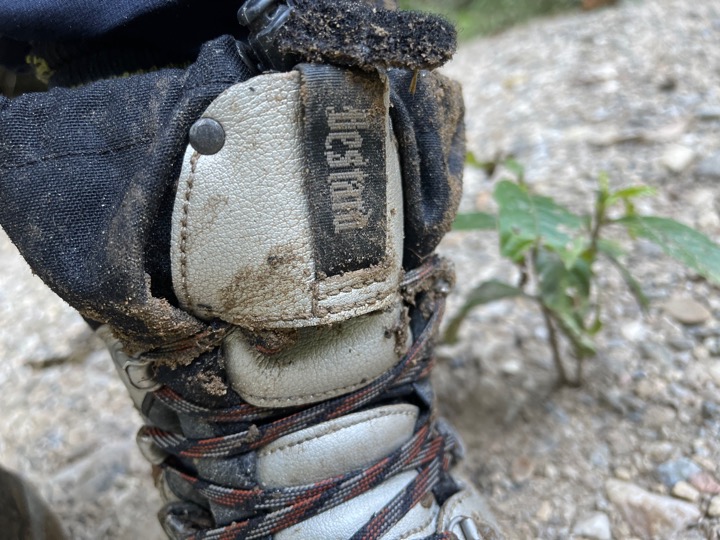
I also discovered that with the Canyon Guide boots, that not only does the gravel guard tightening chord hide away into the tongue, but that the laces do too. This is important, because it’s not only inconvenient to discover, usually half way across the river, that your laces have slipped loose, but it can be downright dangerous as well! One of my pairs of running shoes has a similar sort of hiding place for the laces, these boots have the same clever system… shouldn’t all boots — and possibly shoes for that matter — all offer the same?
Before we get to grip, which along with durability, are my two most important boot criteria, let me talk a little about how easy it is to put these boots on. Normally putting on a pair of boots is a mission in itself. So much so, that prior to these ones arriving, I would often wear sandals to check the camera trap, because I simply couldn’t be bothered to spend minutes of my life putting on a pair of boots, only to take them off again shortly afterwards.
However this pair are so fast and simple to put on and take off, that I found myself wearing them instead of sandals, even for short 5 minute jungle walks. The design is very clever; the boots open wide, making it very easy to get your foot in or out, the top lacing D ring has a locking system and then there are only two pairs of lacing hooks to lace after that, not the five pairs of lacing hooks that my previous boots have (Meindl Islands)!
What I also like about them is that they are soft enough to check for hidden scorpions, without putting my hands or feet in, but that may not be a problem where you live but it’s important here.
Simple, fast and effective. And perfect for the “staircase from hell” experience where I park my fishing boat. This slippery staircase, with missing steps and fallen trees, is a test of nimbleness — only fly fishermen (and elephants) can survive. With the Bestard boots I often find myself literally running up the stairs — because I can! This would be totally unthinkable in the leather boots.
As far as walking comfort goes, they fit properly and, unlike most fishing boots, are obviously built with due consideration of the anatomy of the human foot! They offer good ankle support when climbing down — or traversing across — steep slopes. The lack of weight makes walking fast and easy, and not a slog. The proper fit means that your feet aren’t sliding around inside the boots giving you blisters, as they often do with “wading boots”. If you are doing 15, 20 or even 30Km days then comfort is very important. Especially if you want to go hard again the next day too.
Not only “so far so good”, but genuinely very impressive. But as you’ll know, flyfishers have other concerns, namely how are they going to handle crossing rocky rivers? And how long will they last until the inevitable self-destruct button is pressed?
That second question I cannot answer you yet. Currently there are no signs of wear. Mind you, while I’ve been using them for over a year (the boots are now my first choice of footwear for all activities that require shoes — apart from running), and despite now plenty of hiking in the jungle, so far I’ve only spent six weeks or so walking up, down and through rivers. With other boots that’s usually enough to see the first signs of problems of course, but none so far.
By comparison, the converted hiking boots that I used to use, and which are now stored away, would give me six months straight of NZ fishing before starting to fall apart; lacing hooks falling off, the sole flapping loose, rips appearing in the leather. I would then do a further second season the following year, by the end of which they would be completely buggered and only held together with duck tape, Araldite and luck.
I will add to this review when the Bestard boots are killed — I think that will be useful information for other experienced “boot killers”, but I don’t expect it any time soon. I plan to fish them in the salt too. Saltwater FFing, as you’ll know, is an even harsher environment, corals in particular can shred boots, but I have a huge amount of confidence now in their durability.
But let’s now talk about the most important thing of all… slippery rocks! This is of course why it’s taken so long to make this review; Malaysian lockdowns have been both extensive and restrictive; I simply haven’t had river access (and I was never going to write a review without thorough river-crossing testing!).
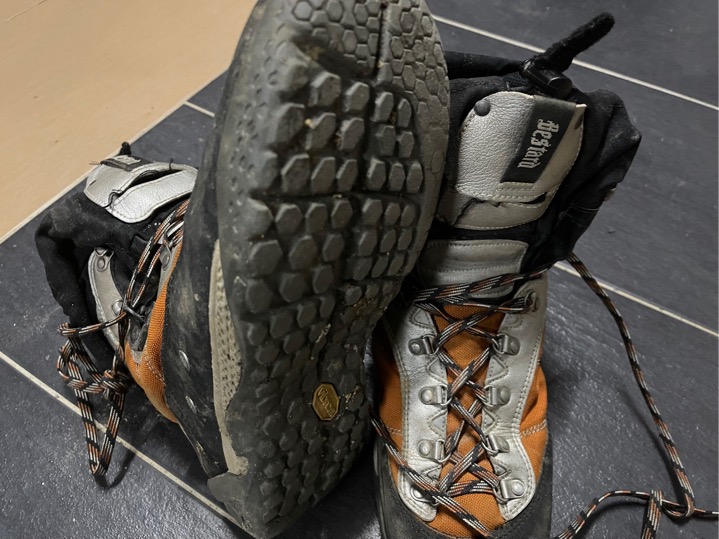
Fly fishing wading boots need grip, as undoubtedly do “canyoning boots.” The soles of the Canyon Guides are a sticky Vibram material. We have been moving away from felt for many years now. In fact it’s now completely banned in many places because it transports micro-organisms. NZ has banned it totally for example — too late unfortunately to stop the initial spread of Didymo. Yellowstone Nat. Park in Montana has also banned felt soles.
Felt was always a bit of a problem when out of the water too of course, as anyone who has slipped down a grassy embankment and fallen arse first into the river will know well (which I would assume includes just about every fly fisherman reading this; I know it’s happened to me MANY times!). Great in the river, dangerous out of the river.
I know that the rocks are slippery in Sungai Tiang, because on my first exploratory trip I fished wearing unconverted hiking boots; I fell in several times and had very some exciting crossings wearing my pack. Those same crossings are now easy; the soles are fantastic and without doubt the best non-felt material I’ve used. I feel very sure-footed wearing them and for me that is the most important part of this review.
The soles are a material from Vibram called “Idogrip” and it is outstanding in the water and appears hard-wearing out of the water.
Stefan Siikavaara asked me if there were holes for screwing in studs. No there aren’t! You could probably make some with a drill. I did this with my old boots conversion. Studs are both good and bad in my experience. They certainly help on algae, no question. However I’ve also taken quite a few hard falls because of them. I really dislike boulder-hopping with studs. And there are times when crossing heavy currents that I want my feet to slide into place. Consequently I haven’t fitted studs to these boots. But I’m sure with a bit of ingenuity they could be fitted.
It’s funny, for decades we were cursing fly fishing boot manufacturers for making inadequate boots. It appears now, finally, that we have a hard-core flyfishing boot… and it’s made for canyoning!
The boots are sized for wearing neoprene socks or booties. So you need to order your standard shoe-size. If you need help determining what that is to be sure, or help with ordering, you can contact Mats at mats@bestard.com
Incidentally the boots are not “waterproof” and have two drain holes on either side. Wearing neoprene booties and waterproof socks will keep your feet dry when splashing through puddles. If you wear waders then wet feet shouldn’t be a problem either — I’m quite sure that your breathable waders will die long before your boots.
You can check out Bestard’s website for more info here:
https://bestard.com/gb/584-canyon-guide
Thanks Bestard for engineering a truly excellent boot — and Mats for having the confidence to allow me to thrash them; something I’m thoroughly enjoying doing!! I hope that you will be very successful in this fly fishing world. I will certainly be recommending them to all my fly fishing friends. It’s exactly what we have been waiting for!
If you ever make a camouflage version then please let me know :)))
~ For more info please see the postscript at the bottom...
Sungai Tiang Fly Fishing
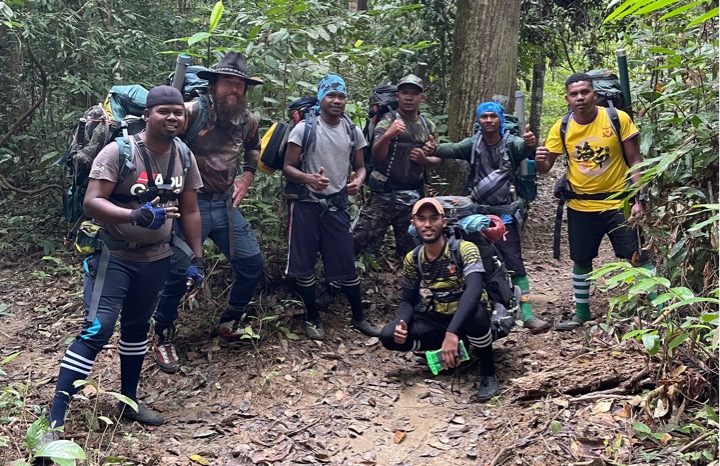
I’m just out from another visit to Sungai Tiang. If you’ve missed it, I’m helping to manage a long-term project to convert a river in the Royal Belum State Park into a protected catch and release, fly fishing only water. The guides, who I’m training, are the local Aslis (indigenous Malaysians) who own and will run the business themselves.
I’m providing my time and assistance for free. Initially it was about guide training, teaching them to fly fish and planning the “beats”. I’m finalising this now, as well as helping decide how the fishing will take place and soon I shall be marketing it. We’ve had sponsorship from Sexyloops readers (many many thanks!) and, I’m happy to say, that they will be opening doors to paying guests in late January or early February.
This last visit, I came up with a better plan on how to potentially organise trips. With the current proposal, guests would have ended up walking both up and down the river twice (because of camp layouts). To be precise on a 5 day fishing trip there would be 54km of walking for fishing a 15km stretch of river! I think now a far FAR better plan, is instead of a porter carrying gear, that we have an inflatable raft that is pulled and paddled upstream behind the angler/s later in the day (by two porters) and that this is then used to float everyone out at the end of the trip. Instead of a long hike out with tired legs, a pleasant boat ride is far more preferable. And of course it means they can carry ice! :))
If you know any inflatable raft manufacturers who might be interested in assisting in this project, or at least helping me understand what is required, then please let me know. Initially they will need two six-person rafts. Hopefully when COVID allows we will see many Sexyloops readers here, both visiting them on the river as well as visiting me on the lake!
I’m enjoying this project. Hopefully it will be a roaring success. Who knows? Projects like this often have a snowball effect and it’s the first of its type in SE Asia. In fact for this specific type of fly fishing adventure it’s actually one of a kind. It’s just possible that more similar projects happen. And that’s got to be great for fly fishing, the fish and the locals.
So I’ll be busy over the next weeks organising gear and rafts for Sungai Tiang, a website, starting to promote the venue… and fishing flat out myself too. I’m also organising the long-awaited HT5 — more on that in another Front Page.
Have a great week. :))
Cheers,Paul
Ps I asked Mats at Bestard a few questions and sent him the review. This is his comprehensive reply which I thought best to post in full...
Hi Paul,
wow that was really a very positive review, thank you soo much! We are really glad to hear that you are happy with the boot! :-)
I don't know if you still need the information asked for, but here it is:
Some ten and more years ago, there was practically only one manufacturer of proper canyon boots, and they had a kind of monopoly in this market. They used an own developed rubber compound with a very good grip on wet grip. The problem with this boot was that it was not very durable. But, it seemed as they were alone in the market, they did not work a lot on improving this problem.
As Bestard is located in Mallorca (an island with a lot of canyons and caves), Spain (a country with a lot of canyons, caves and aficionados in these activities), we where constantly asked to develop a canyoneering boot with longer durability. (as we are known for making durable, quality products).
We asked Vibram if they could not make a similar compound, and, to our surprise, one day they told us that they had this new Idrogrip rubber compound developed and available.
What then followed was a design and development period of our two years, with a lot of testing etc. On one hand, we developed the outsole in cooperation with Vibram. The features should be a big contact surface for the grip (and not pointed lugs), especially accentuated at the heel and toe areas, and channels for the water to run through/below the feet without affecting grip. We also made the rubber in a grey colour, in order to avoid black marks at rocks and other surfaces where the boot might be used).
Regarding the development of the boot, we took a lot of advice both from canyoneers and from cavers (cavers are much more boot killers than canyoneers), and asked them how their idea footwear should be.
The main point for all people asked was durability, so that was top priority. We looked for very strong corduras, extremely strong stitching threads (same as used for sail making) etc. Apart from being resistant to normal wear and tear, abrasion etc, it was also very important to find materials which would resist the extra tough situation of being exposed to water (a very aggressive element), and a constant cycles of getting wet, then dry, the getting wet again etc. , something which is very aggressive as such, and which out-rules materials like leather and other materials which can rot and/or dry out and crack under such circumstances.
Number one request of course also a good grip on wet rock.
Other requirements from the users were details such as:
Walking comfort for the approaches
Built in gaiter for avoiding debris entering the boot.
A good water evacuation
Bright colours for seeing the feet when in swift water, for better feel and control where to put the feet.
Other canyon boots had a kind of buckles instead of laces for fixing the boot on the foot, but these buckles always were the first thing to break. We therefore opted for laces, which normally don't break, and if they break can be easily replaced. Laces also fix the boot better of the foot than two buckles. Many people were against this in the beginning, but time has proven us right.
Some safety matters which we thought out ourselves where:
- reflective elements for better visibility in the dark (like caves)
- 2 pockets at the tongue for hiding knot/excess lace and the gaiter drawcord.
The testing during the development was made by a team of very experienced and demanding canyoneers, some of which experts in canyoning expeditions in complicated terrains with a lot of walking and wear/tear, like in the Amazonas, the Reunion Island etc..
The boot was finally launched in 2011, and has been a popular model. During these 10 years we have changed and perfection some details, like the material of the black rand, changing to stainless steel hardwear etc
The boot is mainly used for the activities it was initially designed for (canyoning and caving), but people have also found it useful for other activities such as jungle/monsoon trekking, rafting/kayaking, coasteering, and fishing. Currently we are selling the boot i some fishing shops with good result.
Regarding studs, when we made the sole we did not have this in mind, so there are no special holes or areas especially designed for those, but as far as we have heard, they can be placed (screw max 7mm, I think).
Regarding sales inquiries, we don't sell directly to end-users outside Spain, so it would better to our
dealer locater https://bestard.com/gb/stores
on-line dealer locator https://bestard.com/gb/info/stores-on-line-59
and commercial network (agents and distributors). https://bestard.com/gb/info/contact-details-71#international-commercial-network.
Please note that not all shops and distributors are working this particular model.
This shoe is available in shops/on-line shops in countries like:
Spain
Portugal
Belgium
The Netherlands
The UK
Ireland (in process)
France
Italy
Germany
Switzerland
Austria
Slovenia
Croatia
Bosnia Herzegovina
Australia
New Zealand
The USA
Mexico
In any case, even if we dont sell directly, of course end users can contact us if they have any doubt about the product, where to buy etc.
Contact emails:
Mats mats@bestard.com
Mikaela Carberry: export@bestard.com
Again, many thanks for your fantastic review and for promoting this boot in your community!
That was a great reply!! :)))