Nick Moore | Wednesday, 5 January 2022
40mph winds can be quite uncomfortable to fish in, especially when it is followed by rain. I see quite a few people heading to the bank when the wind is behind them (tailwind), but late/early season, the fish are downwind. Now of course there are exceptions, but it’s a good idea to start there first, especially on the larger reservoirs.
For some reason, anglers seem to think that the bank with the wind behind them is the easiest. In fact, I think this is the hardest bank to fish, because you have to push that line into a tail wind, and the fish aren’t usually there. Learning to distance cast gives you the skills to deal with the wind better, and switching to either a long belly or DT line will help as it’s incredibly difficult to shoot line into a head wind. With the wind behind they are amazing.
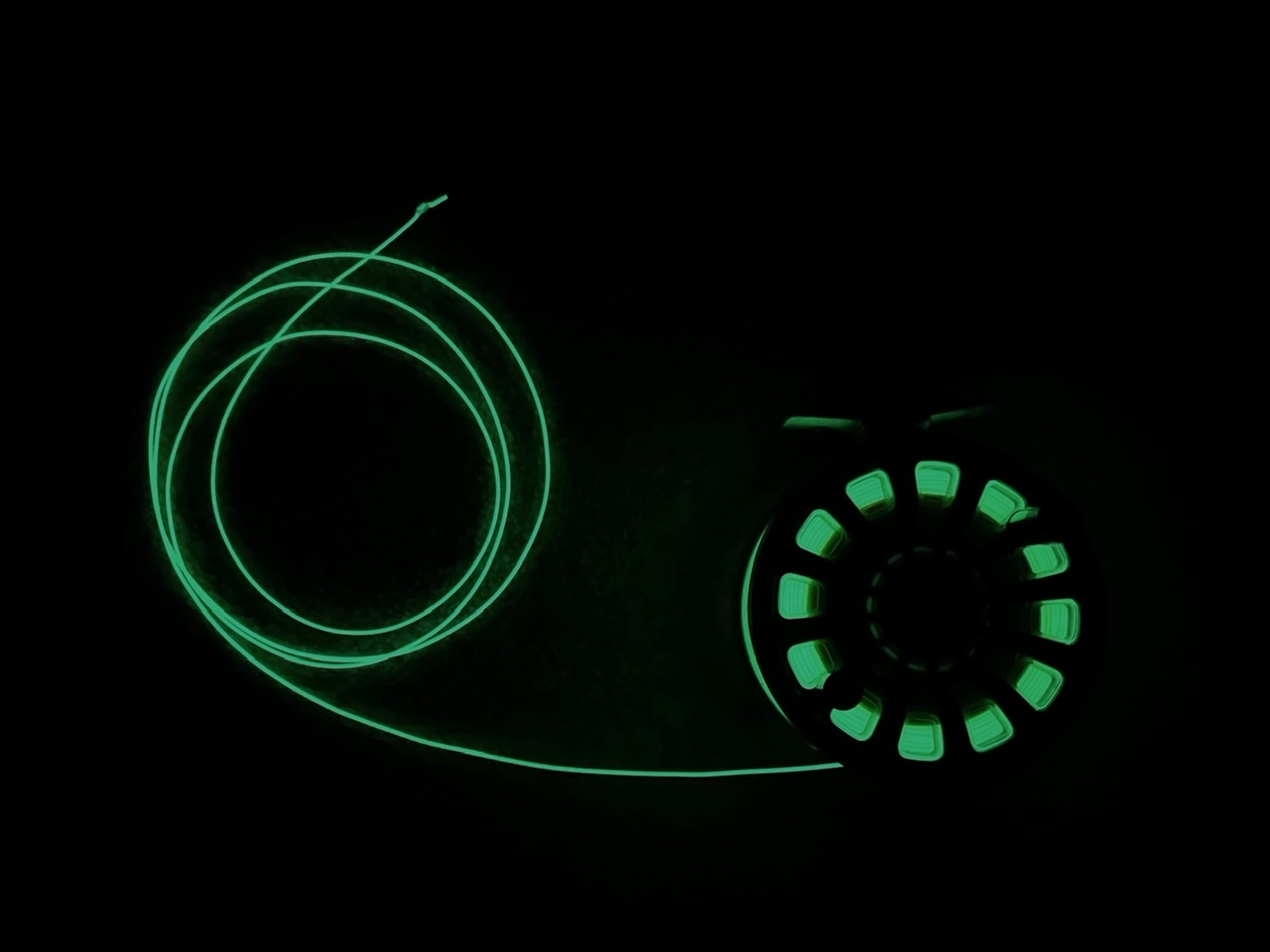
Most fishing can be done with an intermediate, which is denser than a floating line, or even consider using a fast sinker. These deal with the wind very nicely, and make fishing easier. Of course, this depends on your choice of tactics on the day, the wind in the UK tends to send the fish down, so that’s why I use an intermediate (SL DT6 Lumi-Line). This is my favorite fishing line, as you can deliver whatever you can carry, which makes an enormous difference to fishing. Maybe it has magic fish catching powers as it glows, but I could be mistaken.
I see quite a few people struggling with a tailwind, especially with the flies hitting people which is down to slack and therefore sag. This is mainly down to anglers consciously (or subconsciously) wrenching the rod hand back as hard as possible to try and get the line to go backwards. Wrenching the hand backwards accelerates the line on a large curved path, which means the line isn’t being aimed at the target, and therefore it is not accelerated as much as possible. Tracking issues also contribute to this curved path, which makes it almost impossible for the line to straighten into a wind. It’s very inefficient and highly wind resistant which is why it’s very slow and pretty much collapses. The solution is to work on good loops and making the haul more efficient, hauling after the rod butt passes the vertical |. Perhaps the best technique of all to cast into the wind is the 170 stop less cast which gives you the highest possible velocity, coupled with an excellent haul it makes very light work of the wind. Paul recommends a tight low side arm back cast and an overhead cast that features a slightly open loop to act as a sail. This is down to the pickup and also has less chance of tangling if your back cast doesn’t straighten completely. Personally I use the 170 into the back cast with a denser line, and use a 170 forward cast into a headwind, aimed low about an inch above the target to take out the hover. This requires a high back cast that is 180 degrees away from the target (above the horizontal).
Looking forward to seeing the new HT5, Congratulations, Paul!
Well that’s all for now, Happy New Year to you all, and tight lines!